
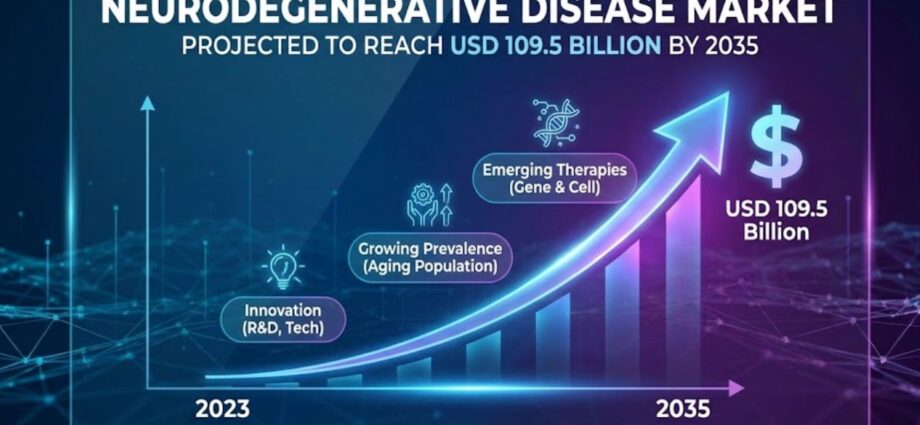
The global neurodegenerative disease market is poised for robust growth over the next decade, with the industry expected to expand from an estimated USD 55.6 billion in 2025 to USD 109.5 billion by 2035. This marks a compound annual growth rate (CAGR) of 6.9%, underscoring the immense opportunities available for manufacturers in this rapidly evolving sector. The growth is primarily driven by the increasing prevalence of neurological disorders, such as Alzheimer’s, Parkinson’s, and Huntington’s diseases, alongside advancements in drug development and research.
Get a Sample Report:- https://www.futuremarketinsights.com/reports/sample/rep-gb-1052
Escalating Demand for Neurodegenerative Disease Therapies
Neurodegenerative diseases are a growing concern globally, with the aging population contributing significantly to the rise in incidence rates. As life expectancy increases, so does the prevalence of conditions like Alzheimer’s and Parkinson’s disease, which has resulted in a rising demand for both symptomatic and disease-modifying therapies.
Manufacturers in the neurodegenerative disease space have a clear opportunity to capitalize on this demand by developing innovative therapies that not only alleviate symptoms but also slow or halt disease progression. Government funding, public awareness initiatives, and an increased focus on clinical trials have paved the way for manufacturers to focus on cutting-edge therapies, including dopamine inhibitors and immunomodulators, which are expected to dominate the market moving forward.
The Leading Drug Classes: A Focus on Dopamine Inhibitors and Immunomodulators
Dopamine inhibitors are projected to hold 44.1% of the market revenue in 2025, largely due to their efficacy in managing motor symptoms associated with Parkinson’s disease. These therapies continue to enjoy high demand due to their proven track record in improving patient quality of life by alleviating tremors, rigidity, and motor fluctuations. Their dominant position in the market is further bolstered by ongoing research to enhance formulations, reduce side effects, and increase the duration of therapeutic effects.
In parallel, immunomodulators are becoming increasingly important in the neurodegenerative disease treatment landscape. By targeting inflammation and immune system dysregulation, immunomodulators are making strides in addressing conditions like multiple sclerosis and Alzheimer’s. The immunomodulator segment is expected to contribute 43.4% of the market share in 2025, with manufacturers focusing on identifying novel targets and optimizing treatment strategies.
Alzheimer’s Disease: The Largest Disease Segment
Alzheimer’s disease continues to dominate the neurodegenerative disease market, with this segment expected to contribute 46.3% of the total market revenue in 2025. The high global prevalence of Alzheimer’s has led to an accelerated focus on disease-modifying therapies that target amyloid and tau protein aggregation. Despite substantial progress in diagnostic tools and biomarker testing, therapeutic options remain limited, presenting manufacturers with a significant opportunity to develop new treatments that address unmet needs in early diagnosis and progression-modifying therapies.
Advancements in genetic research, coupled with efforts to improve access to care, are expected to maintain Alzheimer’s as the dominant disease indication in the neurodegenerative space. As awareness grows, so does the urgency to find effective treatments that address the underlying causes of Alzheimer’s, thus creating an ideal environment for manufacturers to introduce innovative solutions.
Regional Opportunities: Key Growth Markets
The neurodegenerative disease market is experiencing strong growth across key regions, with North America, Europe, and Asia-Pacific emerging as dominant players. Among these, India stands out due to its rapidly aging population and growing healthcare infrastructure. India’s robust pharmaceutical sector, cost-effective manufacturing capabilities, and large patient population make it a strategic hub for research, clinical trials, and the global supply of treatments for neurodegenerative diseases. The United States and the United Kingdom also contribute significantly to the market, thanks to their advanced research facilities and government support for long-term care and research funding.
Emerging markets in Asia-Pacific, particularly China and India, are expected to see a compounded growth rate of 7% to 9%, driven by their expanding healthcare infrastructure, rising demand for advanced therapies, and increasing government investment in research and development. Manufacturers targeting these regions stand to benefit from the growing healthcare expenditure and the surge in demand for neurodegenerative disease treatments.
Overcoming Challenges: Patent Expiry and Generic Competition
While the growth prospects for the neurodegenerative disease market are promising, manufacturers face several challenges, including the looming expiration of patents for key drugs in the coming years. As patents for established therapies expire, the market is expected to see a rise in generic competition, which could lead to price declines and potential revenue losses for brand-name manufacturers.
However, this challenge presents an opportunity for manufacturers to innovate by developing next-generation therapies that offer enhanced efficacy, fewer side effects, and longer-lasting benefits. The focus on personalized medicine and disease-modifying treatments will be essential in maintaining market share and driving future revenue growth.
A Bright Future for Neurodegenerative Disease Manufacturers
The neurodegenerative disease market is on the verge of an exciting transformation, driven by a combination of increased public awareness, significant advances in medical research, and a growing focus on precision medicine. Manufacturers who invest in early-stage research, develop innovative therapies, and capitalize on the unmet needs within the market will be well-positioned to lead in this high-growth sector.
The focus on improving patient care, reducing disease progression, and addressing the root causes of neurodegenerative diseases will shape the future of this industry. Collaborations between biotech firms, pharmaceutical companies, and academic institutions will further accelerate breakthroughs in the treatment and management of neurological disorders.
With the market forecasted to more than double in value over the next decade, the neurodegenerative disease sector offers a wealth of opportunities for manufacturers to create lasting impact, foster innovation, and contribute to the global fight against neurological disorders.
Click Here to Purchase the Report:- https://www.futuremarketinsights.com/checkout/1052
What is the projected market size for the neurodegenerative disease market?
What is the expected compound annual growth rate (CAGR)?
What are the primary drivers of market growth?
Which disease indications dominate the market?
Which drug classes are leading the market?
Why are dopamine inhibitors so important?
How are immunomodulators contributing to treatment advances?
Which regions present the best growth opportunities?
Why is India highlighted as an opportunity?
What major challenges do manufacturers face?
How can manufacturers respond to patent expiry and generic competition?
What role do diagnostics and biomarkers play in this market?
Are there specific opportunities in clinical research?
What should smaller biotech firms or new entrants focus on?
How will precision medicine shape the future of treatment?
What is the overall outlook for manufacturers in this market?
About Future Market Insights (FMI)
Future Market Insights, Inc. (ESOMAR certified, recipient of the Stevie Award, and a member of the Greater New York Chamber of Commerce) offers profound insights into the driving factors that are boosting demand in the market. FMI stands as the leading global provider of market intelligence, advisory services, consulting, and events for the Packaging, Food and Beverage, Consumer Technology, Healthcare, Industrial, and Chemicals markets. With a vast team of over 400 analystsworldwide, FMI provides global, regional, and local expertise on diverse domains and industry trends across more than 110 countries.
Contact Us:
Future Market Insights Inc.
Christiana Corporate, 200 Continental Drive,
Suite 401, Newark, Delaware – 19713, USA
T: +1-347-918-3531
For Sales Enquiries: sales@futuremarketinsights.com
Website: https://www.futuremarketinsights.com
LinkedIn| Twitter| Blogs | YouTube